
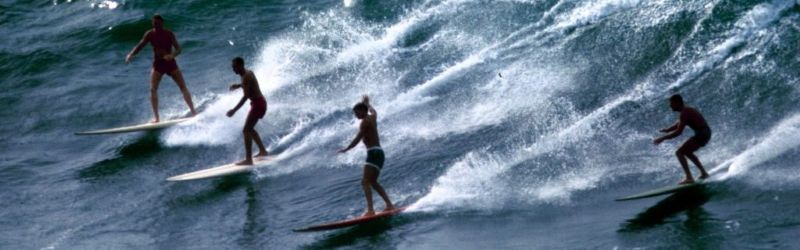
Not all waves are created equally
Waves are created when the wind pushes ocean water toward shore; but all waves are not created equally. The types of waves these wind driven surges of water create depends upon the structure of the shoreline they strike.
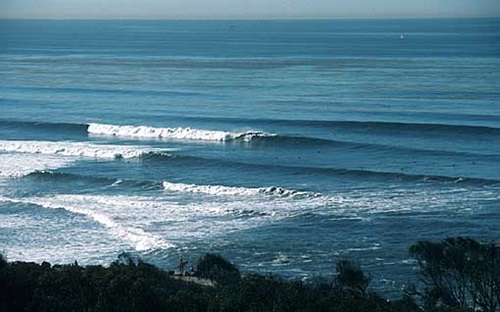
The Beach Break
Here, the wave is formed when the sea-surge runs up on a steadily inclining beach to produce a generally small but surfable wave. Most of us San Diegans learned to surf in the mellow beach breaks at La Jolla Shores, and Mission, and Pacific beaches.
The Reef Break
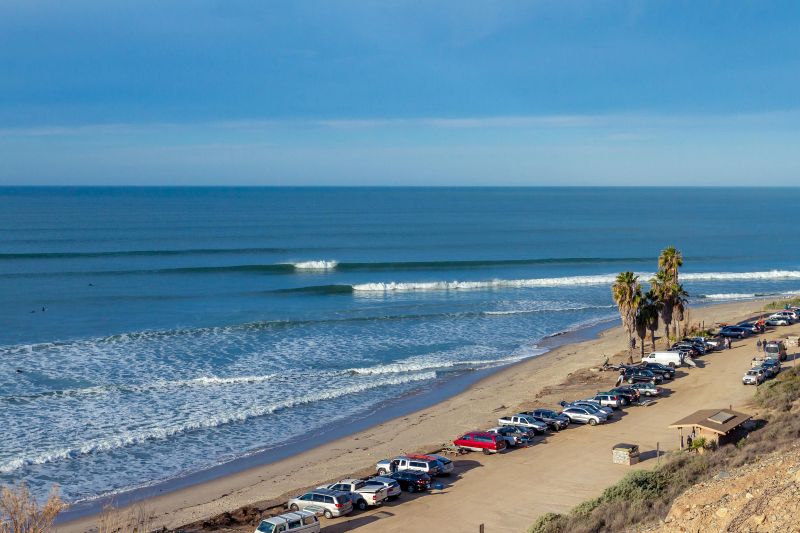
The gentle, shallow-faced swells of Waikiki are the result of that incoming surge of water colliding with, and passing over an offshore obstruction, in this case, a coral reef about a mile out. The swells head straight for shore and hold their form nearly all the way to the beach without barreling over. In Southern California, Palos Verdes Cove and San Onofre are reef breaks.
The Point Break
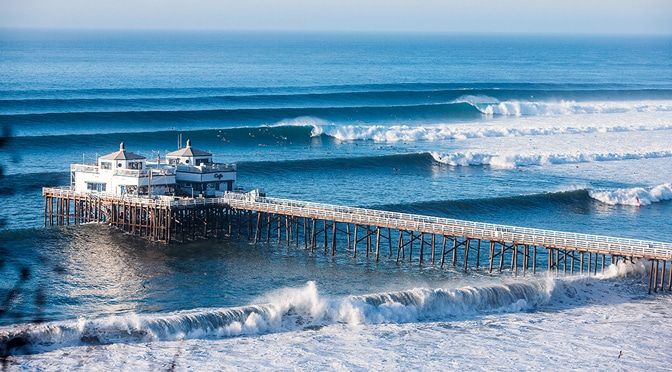
With the point break, the incoming surge of water collides with a peninsula that juts out from the shoreline deflecting the wave energy to the right and left side of the point. Malibu is a point break. There, the best waves break to the right, toward Mrs. Rindge’s rickety old pier. This wave is fast, steep, and it barrels over at the point and continues barreling (or curling) all the way down the beach at a right angle for nearly 200 yards.
Bonus Tracks
Here’s a very short video demonstration of what these three Surf Breaks look like.