
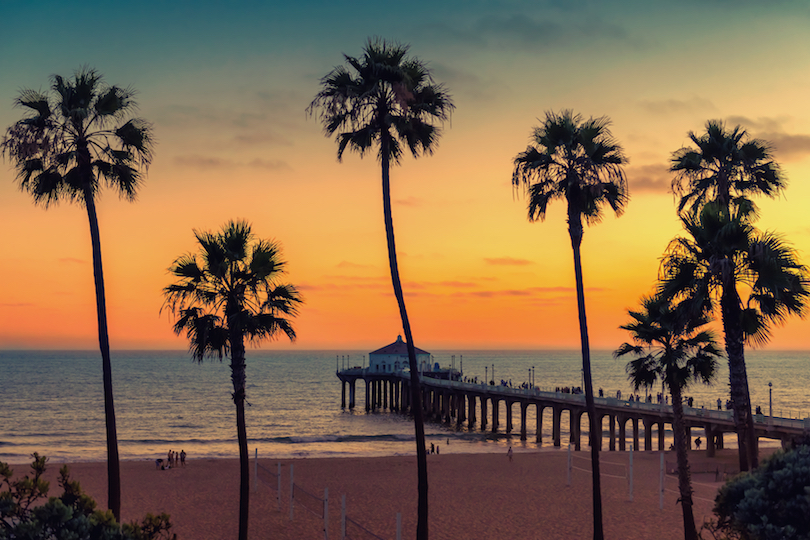
This was the first version of the introduction, which I eventually decided was more autobiographical that it needed to be.
Introduction
I’m sure nearly everyone has heard the old phrase “absence makes the heart grow fonder.” Simply put, the theory states that if one is deprived of a certain someone or something, the sense of loss will greatly enhance one’s appreciation of that particular entity. Anyone really interested enough to want to research the origins of the expression would find that it dates way back to ancient Rome and a poet named Sextus Propertius.
Of course it stands to reason a quip that durable is bound to hold some measure of truth, and who can argue with the simple premise. The whole concept is so elemental it hardly even registers in the realm of human consciousness.
At least, when I was a kid, that’s how it was for me. Sure, I can remember my parents using it to sooth the sting of one of their “cease and desist” orders, but I can’t remember ever seriously reflecting upon it – I mean, it just didn’t “resonate” with me.
It wasn’t until many years later, when I had given in to my own outsized sense of adventure (a very common character trait among Southern Californians) and allowed myself to be lured away from my native soil that I would begin to understand to true poignancy and nagging forcefulness of that old Roman axiom. That’s when it began to resonate with me—relentlessly.
Statistics show that Southern California retains approximately 90% of its native born population. This is one of the highest retention rates in the nation. Most people born and raised there find it difficult to leave.
But then there is that small, unfortunate group of ten per-centers who, for one reason or another, manage to get themselves exiled from paradise. And among that small band of expatriates am I. Of course, at the time of my departure, I had no idea I would never be able to escape the siren song of the Southland.
For me, the adventure started with a relocation to another state and another town, and it all seemed to go down relatively well at first. Traffic was light, there were almost an adequate number of sunny days per year, and houses were practically being given away.
At least it seemed so to a Southern Californian. So what’s not to like? I thought I had settled into this new life, but it wasn’t long before I had what I will describe as my first, Southern California moment.
I was driving down a road I had never traveled on before, when suddenly, from out of nowhere I saw it rise up on my left. There it was, solidly perched atop a supermarket rooftop – a magnificent, googie styled road sign.
It came as a complete surprise to the “surface senses,” but the subconscious recognized it instantly. The sight of that sign hit me with such an unexpected, uplifting jolt of joy that I had to stop the car in order to better absorb its radiant majesty.
To be honest, at this time, I really was not familiar with the term googie, but I knew the style. It was coded into my DNA. Something about that kitschy old road sign spoke to me and took me right back home if only for an instant.
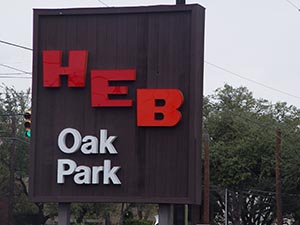
I must have sat there several minutes gawking at that sign, which, to be honest, was not a stellar example of real googie design. But there was something in the whimsical style of the lettering that expressed a familiar playfulness that I had not witnessed in many years.
I didn’t fall to my knees and pray before it, but it almost seemed as if I should have. That’s when I first began to realize that something was not quite right with me; that I wasn’t quite as well adjusted to my new surroundings as I thought I was. It was a wakeup call – there would be others.
Not long after this incident, there was another relocation. Once more, I rolled the dice and moved three more states to the right. This new place actually has all four seasons, and I admit they can be quite beautiful at times, but this is not home.
I’m out of the Sunbelt now and an unaccustomed succession of cloudy days can send the spirit into a debilitating funk. But I hang on. I try to be a good soldier. I try to settle in again, and I think I get a handle on my emotions, when again, I begin to notice certain things.
They’re just little things at first, but I’m on my guard now and nothing is too insignificant to escape my attention – like, how is it that after two interstate moves and several household purgings, I can still find, out in the garage, a few fifty year old issues of Surfer Magazine as well as my YMCA scuba diver’s handbook from 1969? And that’s not all.
I’ve absentmindedly taken to wearing electric blue pool shoes as house slippers. And I’ve been using coco butter scented suntan lotion for after-shave. Somewhere along the line I got the idea that business attire meant tee shirts tucked in and sox with sandals. And how about this? How is it possible that I can still sing the theme song from 77 Sunset Strip?
But these are just the little things that I suppose I could explain away as merely harmless eccentricities. It’s this next item on my list of odd quirks that is the most damning and revealing: why am I compelled to maintain a fully furnished beach house and tiki lounge when the nearest body of salt water is over 250 miles away? Who does that kind of stuff?
OK. There it is. I’ve admitted it. I know I’ve got issues. I’ve heard stories of others with similar conditions, and the warning signs are always the same: It usually starts with a single item, a talisman from back home, that the afflicted can’t bear to part with.
In my case, it was an old set of rattan furniture. At this early stage aggressive treatment is crucial, but my diagnosis came too late. Next came the plastic palm trees, and then a paper machete parrot to hang from the Hawaiian floor lamp.
Later I added authentic Polynesian tiki masks from China, an old surfboard, some tropical prints, a lava lamp, scented candles, and numerous other baubles and trinkets thrown together in the exacting standards of a time honored style that shuns all reference to propriety and good taste, and I have succeeded – it’s beautiful.
Yeah, old Sextus really nailed it. Absence truly does make the heart grow fonder, and fonder, and fonder still. This peculiar condition has stuck with me for decades now, and I’ve become resigned to it. For the rest of my days, I will continue pining for the lost years in exile and shamelessly over-sentimentalize the years I spent growing up in that wonderful world of tropical, modernist, surf styled, California kitsch.
But I suppose you must be wondering just exactly what is all this kitschy, tropical, mid-century, space age, nonsense anyway? Well, it was sort of a perfect storm of both natural circumstances and man-made events and developments that briefly altered the ecosystem of Southern California during the 1950s and 60s.
This unique, sub-cultural phenomenon manifested itself in the design of our homes, our automobiles, our furnishings, our clothes, and even spilled out into our yards. You could find it on the streets, in the schools, churches, and on the playgrounds of the children as well as in the playgrounds of the adults – especially the adults. There was no getting away from it. It was just a part of the landscape, and if you were raised in that place, at that time, then it became a part of you.
Many unique elements set the southland apart from all other U.S. provinces, but the main ingredient in this frothy, pop-cultural soufflé was simply an accident of geography and atmospheric conditions. Southern California had the picturesque shoreline, the wide-open spaces, and the mild, sunny, semi-arid climate that encouraged the expansive growth of literally all manner of human endeavor. It was a seaside desert transformed by man into a tropical oasis, where the mind could, and did, wander completely unchecked by traditional convention.
It was financed by a cold-war defense and aerospace industry that produced more good paying jobs than it could fill, a movie colony that mass-produced feature length fantasies in Cinemascope, and by persistent waves of tourists, and a host of overwrought, domestic, manufacturing conglomerates all struggling to keep pace with 20 years of delayed consumer demand set free by high wages and the installment plan.
Wartime factories using wartime innovations and wartime technology cranked out a plethora of amazing new products. Mass-production techniques and new, synthetic materials allowed consumer goods to be made fast and cheap; and because they could be made fast and cheap, they could afford to be fun; and after a world war, fun was in high demand.
The pursuit of happiness became inextricably linked with the promise of the future, which, through the power of our own technological momentum, would
hurl us away from the darkness and deprivation of the past and into a brilliant new world of progress and plenty.
Intoxicated by an overpowering sense of optimism energized by ambient solar power, Southern Californians created a dazzling world of tomorrow where the unbridled imagination of the masses erupted in a kaleidoscope of creativity.
Here, architects miss-appropriated the severe, unadorned style of European socialists, added a some glass, some googie, a pinch of ranch, a touch of tiki, and a sprinkling of whimsy, and so perfectly blended modernism into the landscape that it appeared to grow wild as the poppy.
Teenagers transformed old, worn out, hand-me-down coupes into snarling, window rattling, 400-horse power chromed and candy-appled road rockets, while the grown-ups drove around in luxuriant, two-toned, white-walled, factory jobs modeled after the latest jet-age motifs.
Veterans returning from the South Pacific shared with the mainlanders their love of the island life and the sport of surfing, which those mainlanders would embrace as their very own.
Strange rhythms and exotic melodies seeped into the sub-conscious through the Stereo-Activated, Dyna-Grooved vibrations of a million rumpus room woofers and tweeters, while electrified, young primitives celebrated the beach beautiful in waves of twangy reverb and four-part harmony.
Shoring up this truly intoxicating cultural blend was the community brain trust. This new, Technicolor world of sun-warmed surfaces and orange scented breezes attracted the best and the brightest from all over the nation and the world with the promise of good jobs, good schools, livable cities, and opportunities to enjoy the expanding leisure hours of the mid-20th century that could not be matched anywhere else in the world. And the people came, and came, and came, and still they continue to come.
All these disparate forces converged at one time in one place and forever altered the daily lives of everyone who dwelled within their sphere. It was a golden era that came and went. The period only lasted about twenty years, but they were the years that continue to define the image and culture of Southern California in the eyes of the rest of the world. In this book, we’ll examine how it all came to be, what it was all about, and where it has all gone.
What you have before you is a true labor-of-love, born of an affection that can only be achieved through prolonged absence. It’s a valentine from a loving expatriate; it’s California Pop; I hope you enjoy it.
Dorian MacDougall